Official government website of the Kingdom of Saudi ArabiaHow to verify
"Save the page"
Links to official Saudi websites ending withgov.saAll links to official websites of government agencies in the Kingdom of Saudi Arabia end withgov.sa
Government websites use theHTTPS for encryption and securitySecure websites in Saudi Arabia use HTTPS encryption.
"The Future of Real Estate" emphasizes the role of modern technologies in construction and services to enhance the real estate supply.
"Save the page"
Monday 08 June 2026
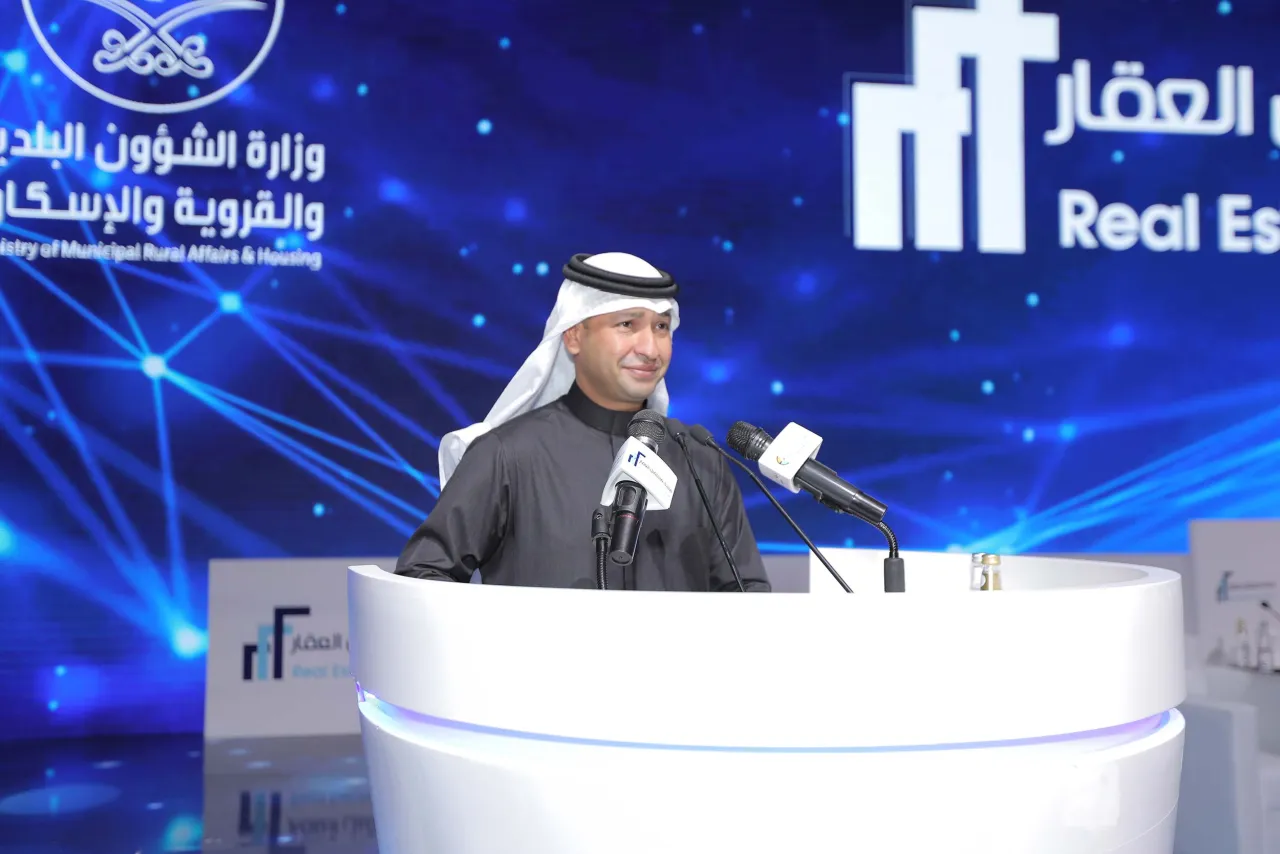
A number of specialists participating in the third session of the first edition of the "Future of Real Estate Forum," held in Riyadh with the participation of more than 100 speakers from the public and private sectors, stressed the importance of using modern building technologies and smart solutions to facilitate an increase in the supply of tourist, residential and commercial real estate in the Kingdom through partnership between the public and private sectors, noting that activating artificial intelligence will contribute significantly to achieving the objectives of the "Quality of Life" program - one of the programs of the Kingdom's Vision 2030.
David Grover, CEO of Roshan Real Estate Group, explained during his participation in the "Smart Cities and Sustainability" session at the forum held under the patronage and in the presence of His Excellency the Minister of Municipal and Rural Affairs and Housing, Mr. Majid bin Abdullah Al-Hogail, that the challenges of the housing sector in Saudi Arabia are not limited to the vastness of the cities, governorates and projects implemented in them, but extend beyond that to the interest in providing integrated serviced housing units through the use of sustainable energy technologies with regard to lighting, infrastructure and cars used in light of global trends to reduce fuel consumption.
The CEO of Roshen pointed out that electronic platforms have a major role in facilitating ownership and acquisition through viewing units and electronic booking, in addition to developing residential communities that meet the requirements of modern housing and creating remote control systems for services within the units, stressing that attracting the best technologies used globally will provide a good profit margin for investors.
Talal Kensara, Head of Strategic Management at the Diriyah Gate Development Authority, pointed out that the development of historic cities and neighborhoods contributes to achieving the goals of the Kingdom’s Vision 2030, ensuring quality of life and interaction among residents. He noted that the development of historic neighborhoods begins with city planning and determining building heights and density.
Kensara touched on the standards of smart cities and the trend towards developing historic residential neighborhoods that tell the story of the country’s past and heritage by creating a strong infrastructure in partnership with the private sector, as well as relying on walking within cities away from the use of cars.
He stressed during his speech at the Future of Real Estate Forum that smart city applications are not enough to preserve the heritage identity of cities, but what is most important is the availability of infrastructure to preserve heritage buildings for future generations by taking advantage of global experiences and new legislation and regulations through effective partnership between the private sector and government agencies to improve the quality of services provided in cities.
Meanwhile, Curtin Hospitality CEO Marlos Nienbenberg explained that there are several definitions of smart cities, which include smart residential complexes with modern building technologies. She emphasized the need to integrate services and facilities within residential communities so that facilities are no more than 5 minutes away from citizens' residences, and to find solutions to reduce carbon emissions and produce environmentally friendly products that provide significant returns on investment.
Matthew Tribe, General Manager of Planning, Design and Engineering at Atkins, noted that the development of smart cities focuses on human nature and understanding current and future needs, stressing that applying sustainability solutions in cities and residential complexes is more important than the return on investment to ensure sustainable housing solutions for citizens, through collecting data to improve people’s lives within modern communities.
Najwa Hamza, Director of Smart Destinations at the Red Sea Development Company, stated that enhancing environmental requirements in the Red Sea Company’s projects began with a basic environmental study, and the company has reached 75% of the requirements to preserve the marine environment to be an environmental reserve using modern technology to change the traditional tourist experience within renewable energy, solar and wind energy solutions to provide water.
Read more
30 May 2026
The Ministry of Municipalities and Housing carried out more than 38,000 inspection tours during the Hajj season of 1447 AH.
The Ministry of Municipalities and Housing, represented by the Holy Capital Municipality, carried out more than 38,000
Ministry of Municipalities and Housing: More than 250,000 tons of waste were removed in Mecca and 16,000 tons in the holy sites during the Hajj season.
The Ministry of Municipalities and Housing, represented by the Holy Capital Municipality, announced the continuation o
[{"title":"In case of not desiring to reclaim the abandoned or damaged vehicle causing visual distortion, or disrupted machinery during or after the impoundment period (90 days), what are the procedures for relinquishing ownership of such vehicle or machinery?","content":"If the owner of the abandoned, damaged, or disrupted vehicle does not wish to reclaim the vehicle during or after the impoundment period (90 days), the following procedures are taken:The relevant entity, such as the secretariat or municipality, sends a notification to the General Department of Traffic inquiring about the possibility of removing the vehicle's ownership from the traffic systems, ensuring that there are no outstanding security claims against it.The owner returns the vehicle's registration plates and submits a letter to the General Department of Traffic requesting the relinquishment of ownership.The vehicle owner signs a written declaration stating the relinquishment of their vehicle, and this information is communicated to the General Department of Traffic through the relevant entity.The vehicle owner settles any outstanding fines associated with the vehicle."},{"title":"How do I use the website's RSS service to find out the news?","content":"By clicking on the icon at the top of the page"},{"title":"What are the available housing subsidy packages?","content":"Currently there are 5 available packages of housing subsidy: Advanced Subsidy Package, House Renovation Package, Self-Build Subsidy Package, Furniture Subsidy Package and Rent Subsidy Package."},{"title":"What is the service of offering the unit for sale?","content":"The service is a reliable and approved real estate market platform for displaying and buying new and used residential products (villas, apartments, floors and lands) from different regions of the Kingdom."},{"title":"Do the husband and wife have the right to benefit from Sakani products at the same time?","content":"Only one family member can benefit from the Ministry's support."},{"title":"Is there a specific age for the housing unit when benefiting from purchasing a ready-made unit product from the market?","content":"There is no specific age, and the age of the housing unit is determined by agreement between the beneficiary and the financing entity."},{"title":"Is it possible to make a waiver of entitlement for a family member?","content":"Waiver of entitlement is only between spouses."},{"title":"Are abandoned and damaged vehicles causing visual distortion located near residential units marked?","content":"Abandoned vehicles causing visual distortion located near residential units are not marked unless there is a complaint from the residents. In such cases, the procedures for marking abandoned vehicles are applied."},{"title":"Can the units under construction be reserved through the real estate developer?","content":"True, reservations can be made through the developer's sales center, and it is possible to communicate with the Ministry's communication channels to find out the location of the sales center for each project."},{"title":"What is the application mechanism for social security employees?","content":"The registration process must be completed on \u201cSakani\u201d platform. If it is found that the application pertains to a case listed in the Ministry of Labor and Social Development lists and is eligible, the application will be automatically transferred to development housing according to the most urgent need."},{"title":"What is the procedure conducted if the owner of the damaged vehicle or disrupted machinery does not respond after the expiration of the designated period?","content":"If (90) days have passed since the impoundment of the vehicle, and the owner has not responded to any notifications and has not contacted the relevant entity regarding the violation during that period from the date of the violation, the municipality has the right to take the necessary legal procedures to recover the towing costs."},{"title":"How much is the real estate transaction tax?","content":"5% is the value of the real estate transaction tax."},{"title":"Will the land be free?","content":"The residential land product is one of the subsidy types and the provided subsidy varies according to the followed mechanism. To know all the subsidy details, please contact one of the official channels of Sakani program."},{"title":"What is the responsible entity for the procedures of claiming abandoned or damaged vehicles causing visual distortion, and disrupted machinery?","content":"The responsible entity is the municipality, and the application should be submitted before the specified impoundment period ends, along with the vehicle's or disrupted machinery's identity and ownership."},{"title":"How do I get certain municipal information?","content":"By accessing the main ministry icon on the site, you will find all municipalities, and you can click on the icon to review municipal information to get a map of the places and names of the municipalities."},{"title":"How can I view the available plans of lands?","content":"Land plans can be viewed via Sakani application or platform."},{"title":"What is a subsidized mortgage?","content":"It is a cost-supported financing program by the Real Estate Development Fund and the Ministry of Municipal, Village, and Housing Affairs in collaboration with banks and participating finance companies, which enables beneficiaries to accelerate their ownership of adequate housing through access to subsidized financing."},{"title":"Is it possible to benefit from self-construction on a land mortgaged to the bank?","content":"Self-construction can be benefited from if the same financier who mortgaged the land agrees to finance the beneficiary with construction loan, and the ministry\u2019s support will be determined according to the mechanism appropriate to the beneficiary."},{"title":"Does the applicant have the right to modify their desire during the online application period?","content":"Yes, the applicant has the right to modify his desire during the electronic application period only, and they are not allowed to change it after completing the signing of housing subsidy contracts with the financier."},{"title":"Does the country bear the tax on the purchase of land?","content":"No, the country does not bear the land purchase tax."},{"title":"What is meant by the product of buying ready-made units from the market?","content":"It means that the beneficiary chooses a ready-made housing unit from the market (whether villa, apartment or duplex), and after being registered with the Advisor and issuing the financier\u2019s approval of the unit, the unit is purchased with support from the Ministry according to the mechanism appropriate to the beneficiary, provided that the building area in the unit shall be more than 125 square meters."},{"title":"What are the (940) call center operating hours?","content":"The center is available for (24 hours)."},{"title":"When are damaged vehicles or disrupted machinery lifted and towed for impoundment?","content":"After the expiration of the correction period (14 days) for the damaged vehicle or disrupted machinery, and after ensuring that there are no security restrictions on it or that the vehicle does not belong to diplomatic missions, the vehicle is photographed from all angles. An inspection report is filled out and the vehicle is lifted by the competent authority in the secretariat or municipality (municipal inspector and towing contractor). The photos and the report are uploaded to the digital system, and copies are provided to the relevant parties.After completing all the above legal procedures, the competent authority in the secretariat or municipality (municipal inspector and towing contractor) proceeds to lift the damaged vehicle from its location using a towing truck (Satha) to the impoundment site."},{"title":"Is it possible to reclaim the abandoned or damaged vehicle causing visual distortion, or disrupted machinery after the expiration of the designated impoundment period if it is still in impoundment?","content":"The vehicle owner is entitled to reclaim their abandoned, damaged, or disrupted vehicle after the expiration of the designated impoundment period, provided that the vehicle is still in impoundment and after paying the fine amount, towing fees, and impoundment costs."},{"title":"What is the aim of the Investment Opportunity Portal?","content":"Aims to provide a unified database, the main reference for investor seeking investment opportunities offered by secretariats and municipalities, which has a significant impact on the development of the Kingdom's cities and villages. The portal offers several advantages, the most important of which is the ease of research and access to various opportunities with minimal time and effort, without the difficulty of travelling to the headquarters of secretariats and municipalities to learn about these opportunities."},{"title":"How to cancel the product after reservation?","content":"Through the personal file, one can start the procedures for canceling the reservation, specifying the reason for the cancellation and saving to confirm the cancellation. Furthermore, the reservation cannot be canceled if an active financing contract is available."},{"title":"What is meant by the ready-made unit product provided by the Ministry?","content":"It means that the eligible beneficiary chooses a ready-made villa from the Ministry and this villa is reserved through Sakani platform, after registering with the Advisor and appearance of the recommendations, and then the unit is purchased by the financier with support provided by the Ministry according to the mechanism appropriate to the beneficiary."},{"title":"- In the event that the financier agrees to buy a house at a stage when the construction structure of the beneficiary has not been completed as a ready-made unit from the market, are there requirements for the ministry when purchasing this unit?","content":"No objection, if the financing authority approves this."},{"title":"What is the engineering design service?","content":"The Ministry of Municipal Rural Affairs and Housing provided an engineering design service, which enables purchase of designs at affordable prices and integrated plans with the advantage of a free license."},{"title":"What is responsible authority for the safety of the abandoned or damaged vehicle causing visual distortion, or disrupted machinery during the process of lifting, transporting, and unloading it at the impoundment site?","content":"\u2022 The lifting contractor is responsible for the safety of the abandoned, damaged, or disrupted vehicle and its components during the lifting, transportation, and unloading process until it reaches the impoundment site. Photos of the vehicle from all angles are taken at the impoundment site. \u2022 The contractor is responsible for any damages that may occur to the vehicle during towing or impoundment. \u2022 The contractor is committed to ensuring the safety of the abandoned or damaged vehicle while it remains in impoundment."},{"title":"The applicant has the right to choose only one product during the application period.","content":"What are the channels of communication with Sakani?"},{"title":"Does a citizen have the right to apply if he is not employed and is self-employed?","content":"Yes, they can apply if they meet the conditions of Implementing Regulations of Statute of Housing Subsidy."},{"title":"What services are available under the City Development Service?","content":"1\/Giving a technical opinion on local planning issues 8\/Determining the phases of the sites' urban range 2\/ Adoption of a large \u201cwhite\u201d raw land plan 9\/Edit approved scheme 3\/Giving a technical opinion on urban planning issues 10\/Agricultural Land Development 4\/ Giving a technical opinion on the request to establish electrical stations 11\/Integration of land located in more than one scheme 5\/ Giving technical opinion on issues related to the building code 12\/Follow up lighting works for private schemes 6\/ Giving technical opinion on renewable energy projects 13\/Provide municipal sector statistics 7\/ Giving a technical opinion for the consultations related to the Saudi Building Code 14\/Dissolution and annexation of the village"},{"title":"If a residential product, that is not commensurate with the beneficiary's purchasing power, is offered, what is the followed procedure?","content":"The beneficiary can choose what is appropriate to the purchasing power of one of the available residential solutions \"Purchase from the market - Self-build - Residential land - Housing units under construction - Prefabricated housing units from the Ministry\". You can view the residential and financial solutions through Design Your Support Service on the Real Estate Consultant."},{"title":"What electronic services does my country offer?","content":"A range of e-services, which you can see in the services directory by clicking and visiting the page link"},{"title":"What is the time period for the eligibility status to appear after registration?","content":"The beneficiary's eligibility status will appear immediately."},{"title":"Is it possible to view the projects under construction?","content":"Yes, via Sakani application or platform."},{"title":"Can I get housing financing support above SAR 500 thousand?","content":"Yes, if the financier agrees but the proportion of support you receive is calculated on the maximum profit of SAR 500 thousand."},{"title":"Does the country bear the tax on self-build?","content":"No, the country does not bear the tax on self-build."},{"title":"What is meant by land and loan product?","content":"Lands that are submitted through a sakani platform, provided that he pledges to build a house on it within a certain period, and the beneficiary can take real estate financing to build on it, and it will be supported on the profits of the first 500 thousand from the loan at a certain percentage."},{"title":"How to calculate support for the profit ratio of the beneficiary's financing amount?","content":"The amount of support is calculated at a certain percentage of the number of profits for a maximum amount of SAR 500,000 for the amount of funding. Calculate the support of monthly earners (basic salary + housing allowance only) and deduct insurance or retirement from it. If the result is SAR 14,000 or less, the support rate will be 100% without consideration for the number of family members. After the payment of the monthly instalment to the financier, divide the support amount in equal monthly payments for a maximum period of 20 years and transfer it from the real estate fund account to the beneficiary's account."},{"title":"How can I view and purchase designs?","content":"The design can be viewed and purchased through the Sakani platform or through the comprehensive Sakani Center."},{"title":"What is the space of the housing units in the projects under construction?","content":"The spaces vary according to the existing project."},{"title":"What services are available within the Environmental Sanitation Service?","content":"1\/Receive or Give a commercial site in public benefit markets 10\/Damage to non-food items 2\/Election of heads of professions 11\/Remove damaged cars 3\/Correction of existing building position 12\/Remove discarded cars 4\/Feedback on the sites of poultry and animal production projects 13\/Issuance of mechanism permits for transporting waste and debris 5\/Training in slaughterhouse works 14\/Support for hygiene services at national and annual events 6\/Give a technical opinion on import\/export of entertainment horses 15\/Request for hygiene services 7\/Issuing a slaughter permit for a kitchen during Eid al-Adha 16\/Transfer of tailings and demolitions 8\/Settling infringement of environmental health regulations 17\/Issuance of burial permit 9\/ Give a technical opinion in the field of hygiene 18\/ Give a technical opinion on food regulations and specifications"},{"title":"What is the specified deadline or time frame for marking abandoned or damaged vehicles causing visual distortion, and disrupted machinery?","content":"The correction period for abandoned vehicles is 20 days, granted to the owner to address the vehicle, and the period starts from the date of marking the abandoned vehicle. The correction period for damaged vehicles or disrupted machinery is 14 days, granted to the owner to address the damaged vehicle or disrupted machinery, and the period starts from the date of marking the damaged vehicle or disrupted machinery."},{"title":"What is the responsible entity for abandoned vehicles?","content":"Abandoned vehicles causing visual distortion fall within the responsibility of the Ministry of Municipal Rural Affairs and housing. Abandoned vehicles causing security concerns or posing a security risk fall within the responsibility of the Ministry of Interior"},{"title":"What is meant by abandoned machinery?","content":"Abandoned vehicles are divided into two categories: Visually Distorting Abandoned Vehicles: These fall within the competence of the Ministry of Municipal Rural Affairs and Housing. The defining characteristic is that they cause visual distortion.Abandoned Vehicles Causing Security Concerns or Traffic Obstacles: These fall within the competence of the Ministry of Interior. According to local terminology, vehicles that are abandoned in streets, public squares, or public parking lots and are visually distorted are within the competence of the Ministry of Municipal Rural Affairs and Housing. However, vehicles that are abandoned, still usable, and pose a security concern or traffic obstacle are not within the competence of the Ministry of Interior."},{"title":"What are the services provided by the Ministry of Municipalities and Housing and its secretariats and municipalities?","content":"1\/Licenses and Certificates 2\/Classification of contractors and engineering offices 3\/Environmental sanitation 4\/Area and Land 5\/Municipal Councils 6\/Assets and Investment 7\/Infrastructure 8\/City Development 9\/Interaction with customers 10\/Control & Inspection"},{"title":"What is the responsible entity for the damages that occur to the abandoned or damaged vehicle causing visual distortion during its stay in impoundment?","content":"The lifting contractor is responsible for any damages that occur to the vehicle during its stay at their specific impoundment facility."},{"title":"What is My Country portal aiming at?","content":"My Country portal aims to improve the quality of municipal services provided to all secretariats and municipalities of the Kingdom, activate the role of beneficiaries as active partners, improve their level of satisfaction and enhance the level of transparency among the municipal sector."},{"title":"What is the procedure conducted after identifying abandoned and damaged vehicles causing visual distortion, and disrupted machinery?","content":"After field observations are recorded, they are automatically entered into the dedicated system for tracking abandoned and damaged vehicles, and disrupted machinery. The process of dealing with the vehicle begins with marking the vehicle and notifying the owner or authorized person via text messages about the need to rectify the vehicle's status within the legal timeframe. If the owner or authorized person fails to respond, the vehicle is towed and impounded at the designated location. During this period, coordination with the Ministry of Interior is established through electronic connectivity services to finish the procedures related to dealing with the vehicle."},{"title":"What does Sakani program aim for?","content":"The program aims to provide housing solutions that contribute to improving the lifestyle of our beneficiary families to build a community whose members enjoy multiple ways of owning a home. To check the eligibility status immediately, please complete the entry procedures through the Sakani application"},{"title":"What is the responsible entity for the inspection of abandoned and damaged vehicles causing visual distortion, and disrupted machinery?","content":"The responsible entity for marking abandoned or damaged vehicles is the secretariats or municipalities. The process is carried out by inspectors from these secretariats or municipalities during field visits.The relevant secretariat or municipality notifies the General Traffic Department and the General Investigations Department electronically with the data of the abandoned and damaged vehicle, or disrupted machinery before placing the warning sticker. This is done to verify that there are no security restrictions on the vehicle or that it is not owned by diplomatic missions. If there are any security restrictions, the security authority is informed to proceed accordingly.If there are no security restrictions on the vehicle, the marking process is carried out by the secretariat or municipality by placing a warning sticker on the abandoned and damaged vehicle, or disrupted machinery."},{"title":"Are there any fees for offering units for sale on Sakani?","content":"The service is free and there is no charge for it."},{"title":"Is it possible to buy a house mortgaged to the Real Estate Development Fund through subsidy of the Ministry?","content":"No objection, but the bank must pay the full amount to REDF and the mortgage is released, as there cannot be two mortgages on the same house"},{"title":"When is the abandoned vehicle causing visual distortion removed and towed for impoundment?","content":"\u2022 After the expiration of the correction period (20 days) for the abandoned vehicle, and after ensuring that there are no security restrictions on it or that the vehicle does not belong to diplomatic missions, the vehicle is photographed from all angles. An inspection report is filled out and the vehicle is lifted by the competent authority of the municipality (municipal inspector and towing contractor). The photos and the report are uploaded to the digital system, and copies are provided to the relevant parties.\u2022 After completing all the above legal procedures, the competent authority in the secretariat or municipality (municipal inspector and towing contractor) proceeds to lift the abandoned vehicle causing visual distortion from its location using a towing truck (Satha) to the impoundment site."},{"title":"Is there a direct financing provided by the Ministry of Municipal Rural Affairs and Housing (MOMRAH) or the Real Estate Development Fund (REDF)?","content":"The beneficiary can obtain the housing subsidy through the financiers or and the participating financing companies."},{"title":"How do I subscribe to the mailing list to receive the latest site news?","content":"By accessing the media center in the main list of the site, then the mailing list, you register your email and your data to get the latest ministry news."},{"title":"What are the specifications of the marking sticker?","content":"\u2022 Suitable size that is clear and readable. \u2022 Placement of the municipality's logo and the name of the General Cleaning Department. \u2022 Recording the date of sticker placement. \u2022 Including a statement for abandoned vehicles: \"This abandoned vehicle is considered a violation, and if not corrected, it will be removed from the site after 20 days from this date.\" \u2022 Including a statement for damaged vehicles and disrupted machinery: \"This damaged vehicle\/ disrupted machinery is considered a violation, and if not corrected, it will be removed from the site after 14 days from this date.\" \u2022 Using high-quality adhesive paper. \u2022 Placing two stickers on both sides of the vehicle in a prominent position."},{"title":"What is meant by disrupted machinery?","content":"Metal structures, including vehicle structures, engines, damaged equipment, damaged motorcycles, and vehicle trailers"},{"title":"What services are available within the customer interaction service?","content":"1\/ Poll on draft decisions of his municipalities 7\/Grievances for Fines and Infractions 2\/ Receiving suggestions about public park services 8\/Grievances for Competition and Contracts 3\/ Receiving suggestions 9\/Complaint related to services provided 4\/ The service of receiving notifications regarding the work of the secretariats 10\/Booking an Online Appointment 5\/Fight stray dogs, snakes, and rodents 11\/Commissioner's services 6\/Pest and insect control 12\/Account Manager Services"},{"title":"How can I get housing support?","content":"Registration is done electronically through Sakani application or platform, through the immediate entitlement through the following link . If the status of eligibility (due) appears, the applicant can benefit from one of Sakani products directly."},{"title":"When will the applicant be qualified for residential subsidy?","content":"When the conditions set out in the Implementing Regulations of Statute of Housing Subsidy are met. You can review these conditions by visiting the Regulations and Regulations window on the link"},{"title":"What are the channels of communication with Sakani?","content":"- Beneficiaries Care Center: 199090, working hours: from 8 am to 8 pm (Sunday - Thursday) - Social media \"Twitter\": @saudihousingcc Working hours: 24 hours \/ 7 days -Business WhatsApp: 0554199090 Working hours: 8-4 from Sunday to Thursday. -Branches: Working hours: 8-2:30, from Sunday to Thursday."},{"title":"If the land deed is a \u201cresidential commercial deed\u201d, is it possible to benefit from it for self-construction?","content":"No, you cannot take advantage of it for self-construction."},{"title":"What is meant by damaged vehicle?","content":"A vehicle that is unfit for use and left in a street, public parking area, or public square, exhibiting signs of damage and neglect causing visual distortion."},{"title":"What is the aim of self-assessment in applying precautionary measures?","content":"The \"self-assessment\" tool aims to assist business owners to verify the level of compliance with the precautionary measures in place for business activities based on the guidance of those responsible for managing the coronavirus crisis. This service helps the owner of the enterprise to measure the level of commitment. This assessment results in a comprehensive and clear report, enabling him to plan the transition of his facility to a comprehensive level of compliance, by identifying gaps and working to correct them to achieve full compliance."},{"title":"Steps to benefit from electronic financing.","content":"- Log in to Sakani platform or application.- Select of a real estate product.- Determine the financier.- Enter the financing information.- Accept the initial offer.- Send the application to financier."},{"title":"What services are available for municipal councils?","content":"1\/Voter enrollment in the electoral calendar 2\/Filter Registration 3\/Election of a member of my country's Council"},{"title":"Does a citizen have the right to apply if a suitable home is available to him or a member of his family?","content":"If the owned house is suitable, i.e. armed and habitable, he cannot benefit from housing support"},{"title":"What are the official communication channels for 940 communications?","content":"Call Center: municipal communications 940 Balady 199040 WhatsApp (0548368888 - 0126149779)"},{"title":"Is there a notification before the end of the impoundment period for abandoned or damaged vehicles causing visual distortion, or disrupted machinery?","content":"Yes, ten days before the end of the impoundment period, the secretariat or municipality will notify the vehicle owner or their authorized representative through a text message sent to the registered mobile number in \"Absher\" platform. The notification will request them to claim their vehicle before taking the necessary legal action."},{"title":"What services are available within the licensing and certification service?","content":"1\/ Adding new activities related to commercial licenses 30\/ Issuance of a health certificate 2\/ Report the location of a business 31\/ Issuance of a health certificate (replacement for lost or damaged ones) 3\/ Issuance of a commercial license 33 \/ Cancellation of the health certificate 4\/ Modify commercial license data 34\/ Issuance of a veterinary health certificate for leather and other animal products 5\/ Transfer of ownership of a commercial license 35\/ Permit to provide tobacco products 6\/ Renew a commercial license 36\/ Revocation of permit to provide tobacco products 7\/ Cancellation of a commercial license 37\/ Permit for commercial activities 24 hours 8\/ Issuance of a berth occupancy license 38\/ Events Permit Service 9\/ Cancellation of a berth occupancy license 39\/ Parking Permits Service 10\/ Issuing a license for telecom towers 11\/ Issuing a card for the profession of Dalal 12\/ Issuance of a card for a dalal profession (replacement for lost or damaged) 13\/ Renewal of a card for the profession of Dalal 14\/ Cancellation of a card for the profession of Dalal 15\/ Issuance of the immediate license for warehouses 16\/ Issuance of a new building permit 17\/ Issuing a building permit (replacement for lost or damaged ones) 18\/ Renewal of a building permit 19\/ Transfer of ownership of a building permit 20\/ Inspection visit to construction stages 21\/ Issuance of a building restoration permit 22\/ Issuance of a fencing license 23\/ Issuing a drilling license for major projects 24\/ Issuance of a building demolition permit 25\/ Amending a building permit (adding and modifying components) 26\/ Testimony about a construction site 27\/ site suitability report 28\/ print construction license 29\/ Issuance of a building completion certificate"},{"title":"What is meant by the price offer after booking the projects under construction?","content":"It is a form directed to the financing entity from the Ministry of Municipalities and Housing to confirm the beneficiary's request to finance the housing unit."},{"title":"What is the mechanism for monitoring abandoned and damaged vehicles causing visual distortion, and disrupted machinery?","content":"Abandoned or damaged vehicles are monitored through the following reporting channels:Call Center 940.Social media accounts of secretariats and municipalities.Reports received through official channels.Patrols conducted by inspectors from the relevant secretariats or municipalities.balady application."},{"title":"What services are available within the infrastructure service?","content":"1\/Street Development 18\/Add parking on street 2\/Deduction of land designated as a garden for building of a mosque 19\/Add\/Cancel (junction, wrap hole, passage, light signal) 3\/Issue a technical report 20\/Street Lighting 4\/Add a name to the Road and Street Names Lexicon 21\/Develop or Expand Street 5\/Approval of the creation of an electricity room 22\/ Develop a New Garden 6\/ Approval of hydrological studies 23\/ (renovation and restoration of municipal facilities) markets, cemeteries, public courses 7\/ Approval of traffic impact studies for schemes and projects 24\/Determination of street levels 8\/Approval of requests for the construction of communication towers in public parks 25\/Modify the use of a site or facility to the use of a mosque 9\/ Approval of power room transmission 26\/Change the name of the street 10\/Report on disaster-related data 27\/Organizing the mosque area within the approved public facilities 11\/Set up a sidewalk 28\/Festival Site Configuration Service\/Event 12\/Water catchment clearance (aquatic cluster study) 29\/Integrating Streets 13\/High rock removal 30\/ Asphalting streets 14\/Issuance of permanent linkage licenses with drainage network 31\/Maintenance of road facilities 15\/Issuance of temporary linkage licenses with flood drainage network 32\/Addressing the request for the organization of a government facility 16\/Add or remove the bump, design positions, put indicative panels 33\/Transfer of electrical transformer from house to adjacent garden land 17\/Add facility to the mosque"},{"title":"Can the first beneficiary of the Real Estate Development Fund benefit from the Sakani subsidy?","content":"No, they can't take benefit from it."},{"title":"How do I find tenders of Ministry of Municipal Rural Affairs and Housing portal?","content":"By clicking on \u201csearch\u201d at the designated location at the top of the site, the site will open a new tab containing an advanced search, by selecting the classification of the tenders of Ministry of Municipal Rural Affairs and Housing portal, the site will search and display the results related to the search word."},{"title":"How could you obtain the subsidy packages?","content":"You can apply for the subsidy after having the eligibility through registering with Real Estate Advisor, selecting the product and viewing the available package."},{"title":"What communications are being submitted to the 940 platform?","content":"All communications related to municipal work"},{"title":"What services are available within the space and land service?","content":"1\/Replacement of land grant prior to the instrument's issuance 23\/Purchase of organizational\/grant surpluses 2\/Replacement of land grant unfit for construction 24\/Sorting Agricultural Land 3\/Exception for Building and Land Use Regulations 25\/Transfer Grant 5\/Report on Land Site 26\/Remove infringements on private property 6\/Technical opinion on dual ownership 27\/Elimination of encroachments on unearmarked Government lands 7\/Technical Opinion of Land Property Overlap for Approved Schemes 28\/Estimate of damage caused by the Secretariat\/Municipality's work 8\/Technical opinion to issue an argument 29\/Video Maps Release 9\/The technical opinion of the validity of the instruments' data is not an invocation 30\/Issue maps and spatial information 10\/Express an opinion on real estate newspapers 31\/Release panoramas 11\/Issuance of land document for loss of allowance (survey report) 32\/Issuance of aerial images 12\/Renovation of old grant land document (survey report) 33\/Real Estate Units Maps and Real Estate Areas 13\/Retail residential or commercial land 34\/ Issuance of cadastral reports for raw lands for an area of \u200b\u200b10,000 m 2 14\/Fragmentation of agricultural land 35\/ Issuance of cadastral reports for mud popular buildings (inclined to collapse) 15\/Segmentation of non-residential land 36\/ areal lift 16\/Site ownership update 37\/ Issuance of the cadastral report in conjunction with the lands with the initial plans 17\/Allocation of industrial land to a government entity 38\/ Statement of geodesic points 18\/ Allocating land to a government agency 39\/ Providing real-time corrections data for cadastral surveys 19\/ land settlement 40\/ Expressing a technical opinion on the overlapping of private and government properties 20\/ Modifying the use of agricultural land to another use 41\/ Estimation of real estate in the municipal sector 21\/ Land Use Amendment 22\/Implementation of the High Orders on Grants"},{"title":"Does the country bear the tax on the land purchase?","content":"The country bears the real estate transaction tax (RETT) on the purchase of the first house for the citizen only, up to a value of 50,000 riyals."},{"title":"What services are available within the asset and investment service?","content":"1\/Establishment of service offices 2\/Leasing Investment Land 3\/Renewing investment opportunities 4\/Offering investment opportunities"},{"title":"Does the applicant have to be a Saudi national?","content":"The applicant must be a Saudi national at the time of applying for the housing subsidy and until the housing subsidy is allocated to him. The family is considered Saudi for the purposes of Law and these regulations if the applicant is a Saudi national."},{"title":"What are the housing subsidy packages?","content":"With aim to diversify the options of housing subsidy for the beneficiaries, housing subsidy packages, which are considered an optional solution, are launched. Such packages allow the beneficiaries to obtain non-refundable immediate subsidy up to SAR 100,000 or 150,000 according to the approved subsidy matrix. Such subsidy is provided in participation with Real Estate Development Fund and financiers."},{"title":"What is the procedure conducted when lifting and impounding an abandoned or damaged vehicle causing visual distortion?","content":"The competent authority in the secretariat or municipality notifies the vehicle owner, the General Department of Traffic, and the General Directorate of Investigation and Criminal Research through electronic means that the vehicle has been towed to the impoundment site. The notification includes information about the impoundment site and the subsequent procedures in case of non-compliance."},{"title":"What is the time limit for completing the land product procedures?","content":"When reserving the land, the electronic contract must be signed within 48 hours so that the land is not canceled from the beneficiary.Special Land:The building permit must be obtained and uploaded to \u201cSakani\u201d site and construction begins within 6 months from completion of the allocation; then the construction is completed and occupation certificate is issued within 3 yearsNormal land:The building permit must be obtained and uploaded to \u201cSakani\u201d site within 6 months from the completion of the allocation; then construction must be commenced within a year and the construction is completed and occupation certificate is issued within 3 years."},{"title":"Can I offer my land for sale on the platform?","content":"Yes, you can offer the land for sale on \u201coffering residential units for sale\u201d service, whether it is residential, agricultural or commercial land"},{"title":"Is there a specific period for housing support after registration and entitlement?","content":"There is no specific period for benefit, if the conditions mentioned in the regulation and this regulation are met from the date of submitting the housing support application until it is allocated."},{"title":"Is the beneficiary entitled to subsidized financing for self-build after obtaining the land product?","content":"Residential land product is one of the subsidy types and has housing subsidy differing according to the followed mechanism. To know all the subsidy details, please contact one of the official channels of Sakani program."},{"title":"If the applicant\u2019s status changes after the date of submitting the application so that the conditions for support are no longer met in the application?","content":"The housing support application procedures are stopped, and the applicant may re-activate the application procedures after the conditions are met again."},{"title":"How is the owner of an abandoned or damaged vehicle causing visual distortion notified?","content":"The relevant secretariat or municipality notifies the owner or authorized person of the abandoned, damaged, or disrupted vehicle through a text message sent to the registered mobile number of the vehicle owner or authorized person on \"Absher\" platform via the technical link during the marking process. The notification emphasizes the need to promptly address the situation and remove the vehicle from its location after the specified period, while taking the relevant legal actions."},{"title":"What is the procedure conducted in case the damaged vehicle or disrupted machinery is not claimed during the impoundment period?","content":"If the vehicle owner does not claim their impounded vehicle within thirty days from the date of impoundment, the relevant authority, such as the secretariat or municipality, will notify the vehicle owner electronically. The notification will also be sent to the emirate or governorate and the General Department of Traffic to take any necessary actions and inform the violator to claim their vehicle. After two months from the date of impoundment, the secretariat or municipality will notify the vehicle owner or their authorized representative through a text message sent electronically to the registered mobile number in \"Absher\" platform. The notification will request them to claim the vehicle before the deadline and take the necessary legal action. Ten days before the end of the impoundment period, the secretariat or municipality will send a text message to the vehicle owner, requesting them to claim their vehicle before taking the necessary legal action."},{"title":"What are the solutions and services provided to the beneficiary?","content":"We continue to provide housing solutions that contribute to improving the lifestyle, and you can choose one of the available housing solutions \"purchase from the market - self-construction - residential lands - housing units under construction - ready housing units from the ministry.\" You can view the housing solutions through Sakani website and application"},{"title":"What is meant by the product of units under construction?","content":"It is a selling mechanism through which the beneficiary purchases the housing unit, provided that it will be built in the future (within a maximum period of 3 years) by a real estate developer under the supervision of the Ministry of Municipal Rural Affairs and Housing and is reserved through Sakani platform, after registration with the Advisor and appearance of the recommendations."},{"title":"What is meant by e-finance service? And how to get it?","content":"It is a service that enables users of Sakani platform to apply for electronic financing of real estate products without the need to visit the financier. The service can be obtained after reserving the product by clicking the Services icon on the Sakani platform."},{"title":"How to find qualified engineering consulting offices?","content":"By clicking on a search at the designated location at the top of the site, it will open a new tab containing an advanced search, by selecting the classification of qualified engineering offices, it will search and display the results related to the search word."},{"title":"How do I get relevant websites in the GCC?","content":"Through the website's main menu - public services - sites available on our portal."},{"title":"What services are available within the inspection control service?","content":"1\/Laboratory inspection of food and water samples 2\/Training food and water laboratory technicians 3\/Preparation of technical reports on cracked buildings"},{"title":"Can a citizen apply if he previously benefited from government or private housing support for the purpose of owning?","content":"No, he can't."},{"title":"What is meant by a self-build product?","content":"It means the beneficiary builds a house on a plot of land, or an additional floor, or completes a building under construction upon a progress payment system (it is stipulated that the construction completion certificate is not issued), and after being registered with the consultant and issuing the financier\u2019s approval of the signature, the support is provided from the ministry according to the mechanism appropriate to the beneficiary, given that the building area in the unit is more than 125 square meters."},{"title":"Do I have the right to benefit from Real Estate Development Fund and Sakani subsidy at the same time?","content":"This is not allowed, as one can benefit from either the Ministry of Municipal Rural Affairs and Housing or the Real Estate Development Fund."},{"title":"How is the number of family members modified in Sakani?","content":"There is no need to modify the number of family members through Sakani platform, and when submitting an application with the financier, the number of family members in the family card is relied upon."},{"title":"How long is subsidized real estate finance available to beneficiaries?","content":"Issuance of subsidized real estate finance contracts for up to 25 years on an optional basis to beneficiaries on the understanding that the benefit is due for a maximum period of 20 years. If the beneficiary wishes to increase the period, the beneficiary shall bear the profits of the additional period (up to a maximum of 20 years to 25 years)."},{"title":"What is the responsible entity for the safety and security of the marked abandoned vehicle causing visual distortion and damage?","content":"Marking the abandoned or damaged vehicle causing visual distortion, or disrupted machinery does not hold the municipality any responsibility for the safety and security of the vehicle and its components. During the marking period, the vehicle remains under the responsibility of the owner, who has full rights to dispose of it."},{"title":"Shall the beneficiary pay a monthly installment for the housing subsidy packages?","content":"No, there is no monthly installment as the subsidy amount of the housing subsidy packages is non-refundable."},{"title":"How long is the impoundment period for damaged vehicles and disrupted machinery?","content":"The designated impoundment period is 90 days, starting from the date the vehicle is lifted from the site."},{"title":"When using a package, do I have the right to obtain subsided finance?","content":"No, you cannot obtain the subsided finance, since the housing subsidy can be utilized for once."}]